Analytical Commentary: The Cryptographic Liturgy of Sam C. Serey The Modern Bard of Chaos (Isamantix)
1. The Isamantix Framework: A New Doctrinal Paradigm
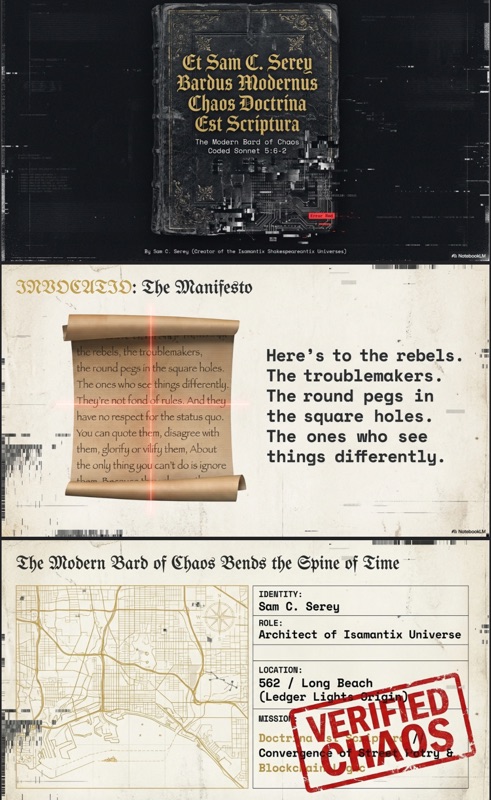
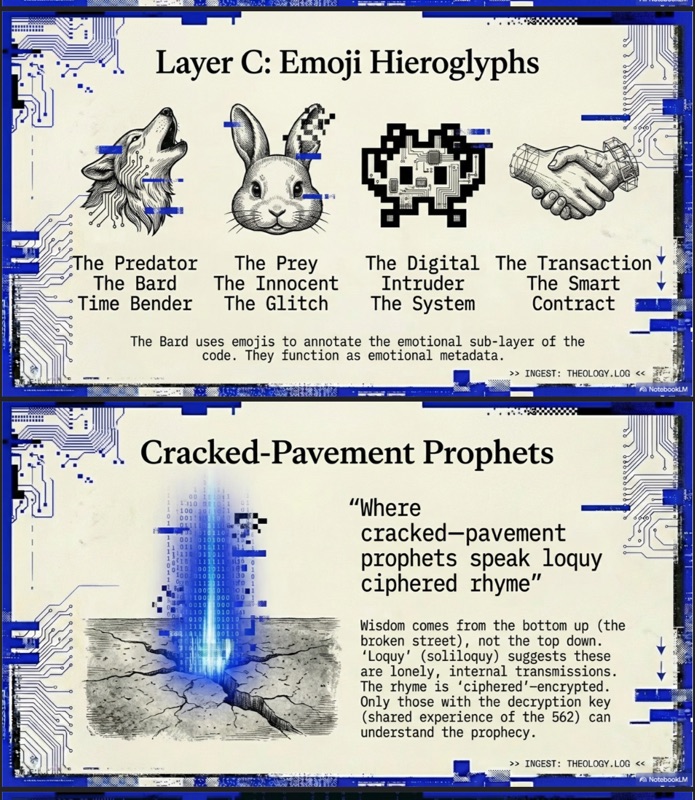
The emergence of the "Isamantix Shakespeareantix" universe represents a sophisticated hermeneutic bridge between 16th-century strophic constraints and the decentralized soteriology of the blockchain. By adopting the persona of the Modern Bard of Chaos, the author constructs a "Doctrina" that serves as a functional liturgical response to post-modern fragmentation. This fusion of high-classical architecture and street-level cryptographic vernacular is not a mere stylistic affectation but a necessary evolution for a narrative intended to survive within the "Biblium Glitch." The Bard functions as a temporal architect, utilizing the meta-commentary of "bending the spine of time" to synthesize the rigorous meter of the Elizabethan era with the volatile, distributed ledger ontology of the 21st century. This temporal collapse allows the Bard to treat the urban landscape of Long Beach as a canonical site for new scripture, transitioning from a mere authorial voice to a primary source of digital revelation.
2. Lexical Convergence: Ecclesiastical Latin and Cryptographic Vernacular
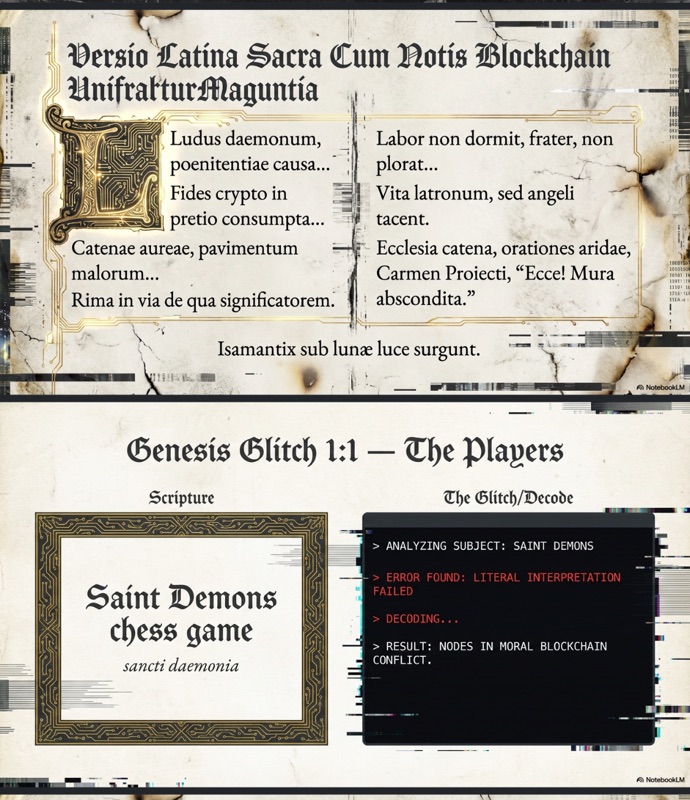
The application of Versio Latina Sacra (Sacred Latin Version) serves to transfigure the technical jargon of the blockchain into a religious rite. This linguistic elevation suggests that network protocols are not merely mathematical, but eschatological. By mapping the digital onto the ecclesiastical, the Bard establishes a world where "uptime" is a state of grace and "latency" is a form of spiritual decay.
Lexical Synthesis: Spiritual vs. Digital Ledgers
Latin Term | Cryptographic Equivalent & The "So What?" Factor |
Sancti daemonia | Moral blockchain nodes: Asserts that the "demons" and "saints" of the street are not binary opposites but active processing units in a conflict-driven moral ledger. |
Monetae fidelitatis | Non-fungible spiritual tokens (NFSTs): Redefines loyalty as an immutable, non-replicable asset; once the "currency fees" are spent, the transaction is permanent. |
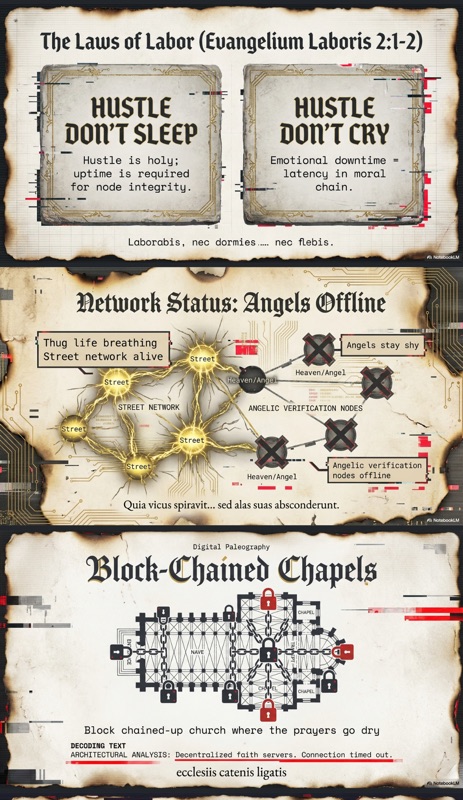
Ecclesia catena | Decentralized faith servers: Positions the "block-chained chapel" as a network where prayers are "dry" (data-driven) because they are validated by consensus rather than traditional clergy. |
Aureolae | Smart contracts of virtue: The traditional halo is reimagined as a self-executing validation that binds cementum fissum (cracked cement), proving that virtue is the binding agent of a broken physical reality. |
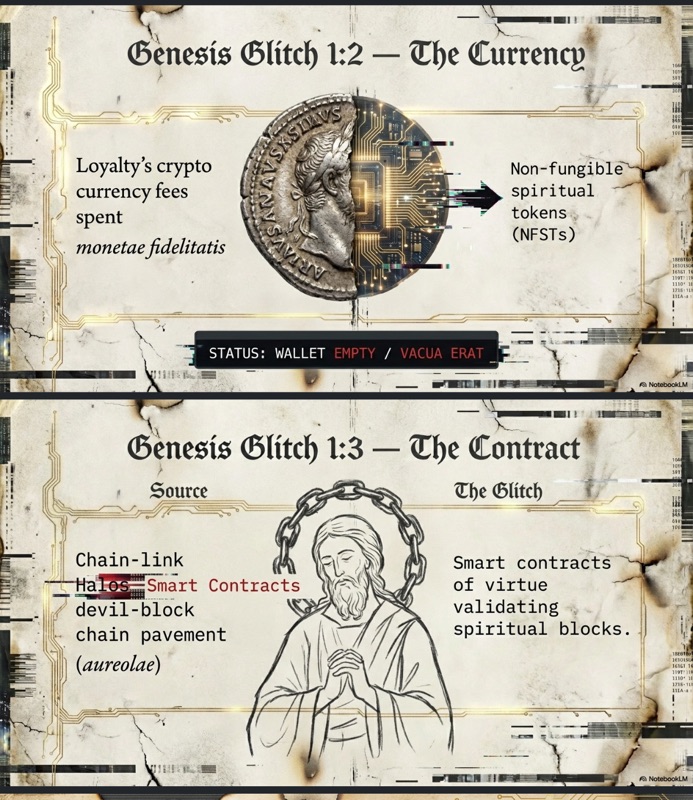
The foundation of this new doctrine is the Genesis Glitch (Liber I – Genesis Glitchi). Within this framework, "spiritual wallets" and "moral chains" are the containers for human integrity. The "Glitch" suggests that the rima in via (the crack in the sidewalk) is actually a hidden ledger block. These fissures in the physical world are not flaws but necessary interruptions that confirm the message’s integrity, providing the data points required to verify the rise of the Isamantix.
3. Structural Metrical Analysis: Modified Iambic and the 5:6-2 Ledger
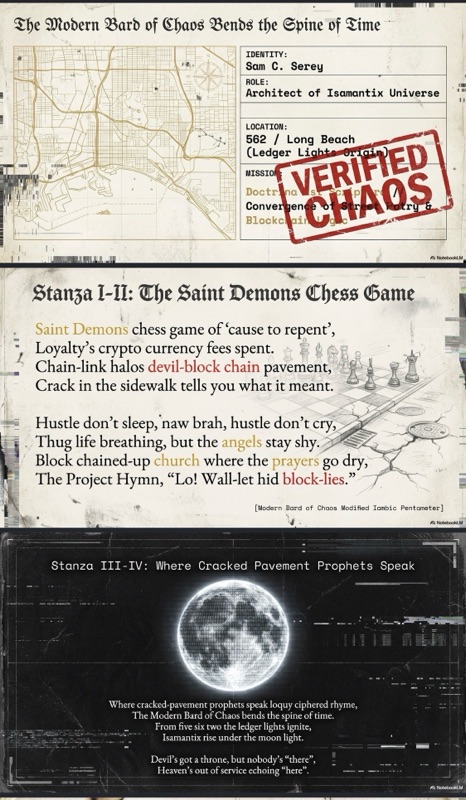
The Bard’s "Modified Iambic Pentameter" is a masterclass in strophic architecture. The progression from the 10-syllable lines of Stanzas I–II to the 12-syllable lines of Stanzas III–IV (the Libra 10-12 Syllable shift) mimics the expansion of a data block. The term Libra—Latin for "Scales" or "Balance"—is critical here; the shift to 12 syllables is a "re-weighting" of the ledger, expanding the poetic line to accommodate the increasing moral and geographic data load of the Isamantix rise.
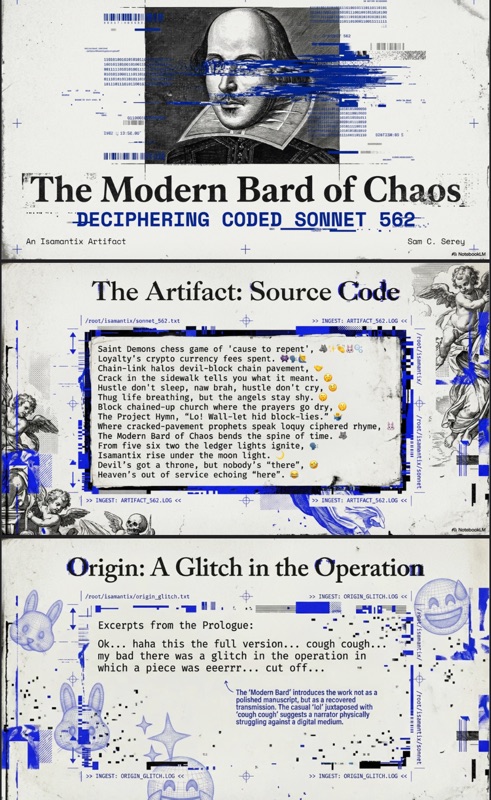
The canonization of the "Long Beach five six two" (562) area code into the 5:6-2 verse notation transforms a local geographic identifier into a scriptural authority. This "ledger light" is no longer a mere telephone prefix but a cosmic coordinate within the Biblium Glitch. This grounding is reinforced by the Carmen Proiecti (Project Hymn), which introduces the "Evangelium Laboris" (Gospel of Work). The mandate "Hustle don't sleep" is the primary commandment of node integrity. Crucially, the hymn declares: "Cripta celat mendacia catenae" (The vault hides the lies of the chain). This provides the essential "OPSEC for spiritual wallets," acknowledging that while the ledger is public, the true "wallet" or "mura" (wall/vault) contains secrets that the chain cannot expose. This rhythmic "ciphered rhyme" creates an atmosphere of inevitability, as if the rise of the Isamantix is a pre-programmed sequence in the universal code.
4. The "So What?" of the Modern Bard: Evaluating the New Narrative
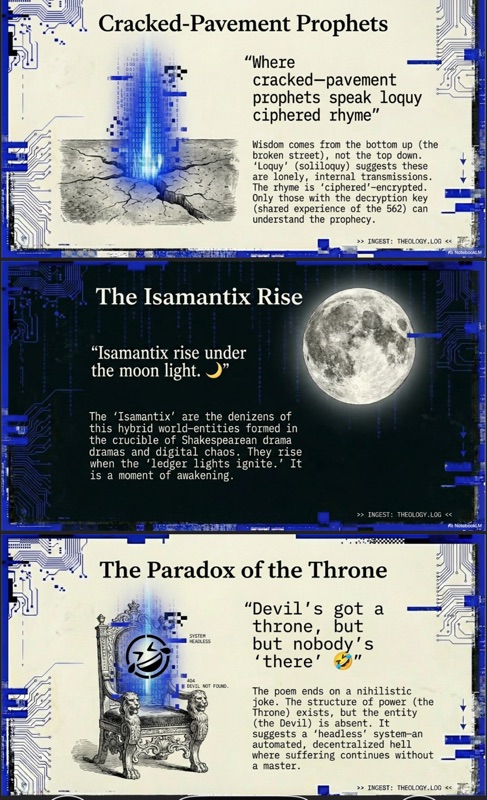
The strategic power of the Bard’s narrative resides in the elevation of "cracked-pavement prophets" and the persistent "Thug life/Angelic" dichotomy. The Bard asserts that the "status quo" is a defunct server, and that divinity must be sought in the "rimae" (cracks). The theology presented is one of haunting absence and persistent echoes: Thronus diaboli, sed nemo "ibi" (The Devil’s got a throne, but nobody’s "there") contrasted with the state of Heaven, which is "out of service" yet resonans "hic" auditur (echoing "here"). This implies that while traditional spiritual "servers" are offline, the divine signal persists as a localized resonance in the 562 coordinate. The scroll excerpt explicitly targets the "rebels," "troublemakers," and "round pegs in square holes."
In the context of the Genesis Glitch, these individuals are not mere social outcasts; they are the "glitches" in the legacy social ledger that allow the Isamantix code to be written. They are the primary validators of the new doctrine. By offering a "ciphered" path to status, the Bard empowers those who "have no respect for the status quo" to find their own "ledger lights" under the "chaotic moonlight" of a decentralized reality.
5. Final Synthesis: The Modern Bard’s Coded Legacy
The Chaos Doctrina is not a mere collection of verses; it is a Biblium Glitch—a functional, sacred text for a digital age where faith is verified by the chain and the street. It provides a structural and linguistic blueprint for navigating a world where the sidewalk is broken but the ledger is absolute.
Critical Takeaways:
- Linguistic Transfiguration: The Bard uses Ecclesiastical Latin to elevate blockchain mechanics into a "Sacred Digital" liturgy, reframing technical uptime as spiritual node integrity.
- Metrical Libra: The expansion from 10 to 12 syllables acts as a "Libra" (Scale), physically re-weighting the poem to mimic the expansion of a growing blockchain ledger.
- Canonized Geography: Through the 5:6-2 notation, the "Long Beach" coordinate is elevated to scriptural status, positioning the "cracked pavement" as the site of the only remaining divine echo (resonans hic).
The record is permanent. Under the chaotic moonlight, the ledger lights remain ignited.
Thank you!
🐰✨🐺✨

Comments
Post a Comment