Briefing Document: Heartstrings on Fire (Opera-Pop Cinematic Suite) by Sam C. Serey (The Modern Bard of Chaos)
Executive Summary
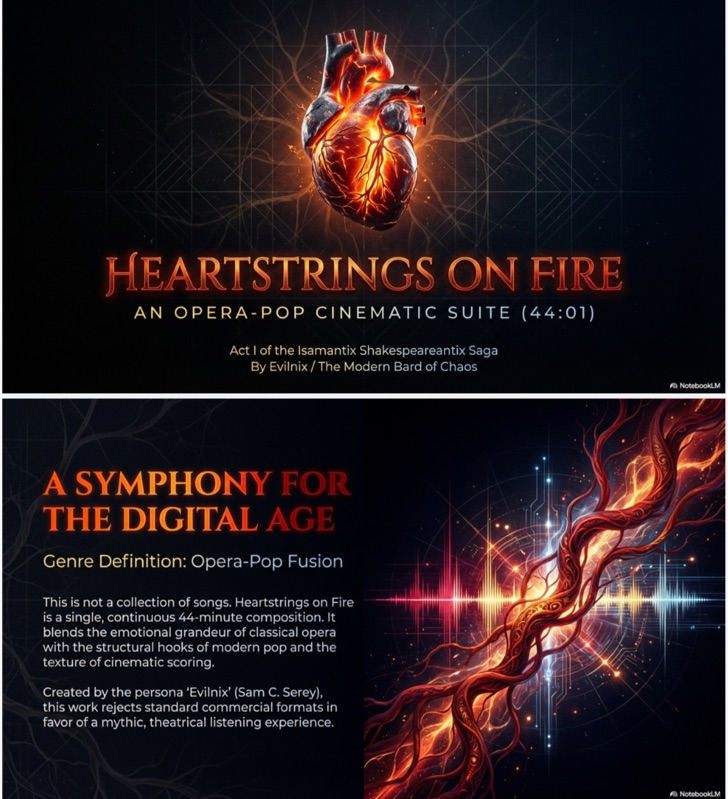
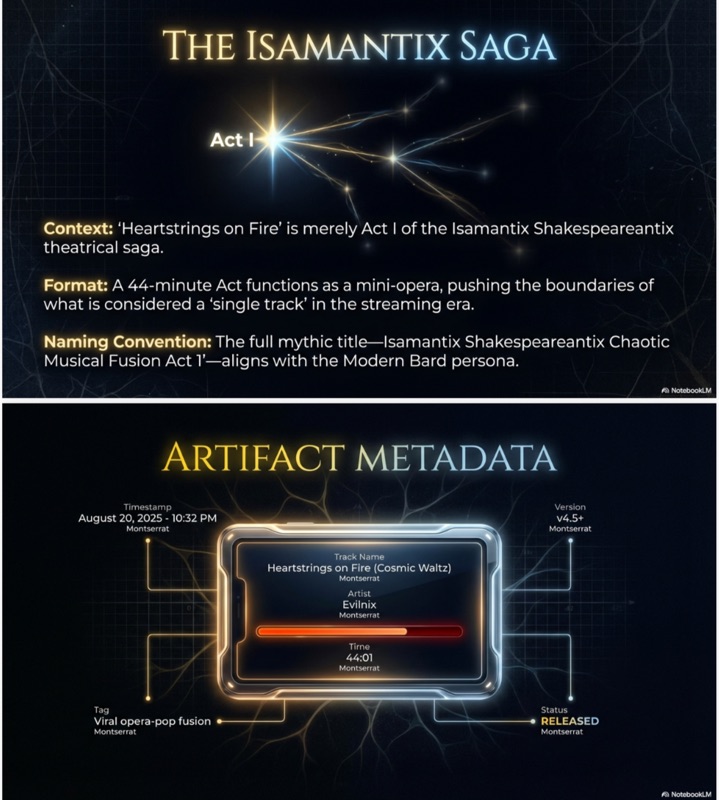
"Heartstrings on Fire" is a 44-minute, long-form cinematic composition that serves as the first act of the larger theatrical saga, Isamantix Shakespeareantix. Structured into eight distinct movements, the suite utilizes a "Cosmic Waltz" framework to track the emotional evolution of a heart from chaotic ignition to transcendent peace.
The project is characterized by its "opera-pop fusion" aesthetic, blending classical instrumentation—specifically piano and violin—with modern elements like distorted synths and heavy percussion. Notably, the work bypasses the standard 8-minute limitations of current AI music generation by employing "human-driven generative logic." By utilizing generative MIDI stems and a manually structured long-form arc, the composition achieves a complexity and duration typically associated with operatic acts or experimental classical suites.
--------------------------------------------------------------------------------
Project Overview and Artistic Identity
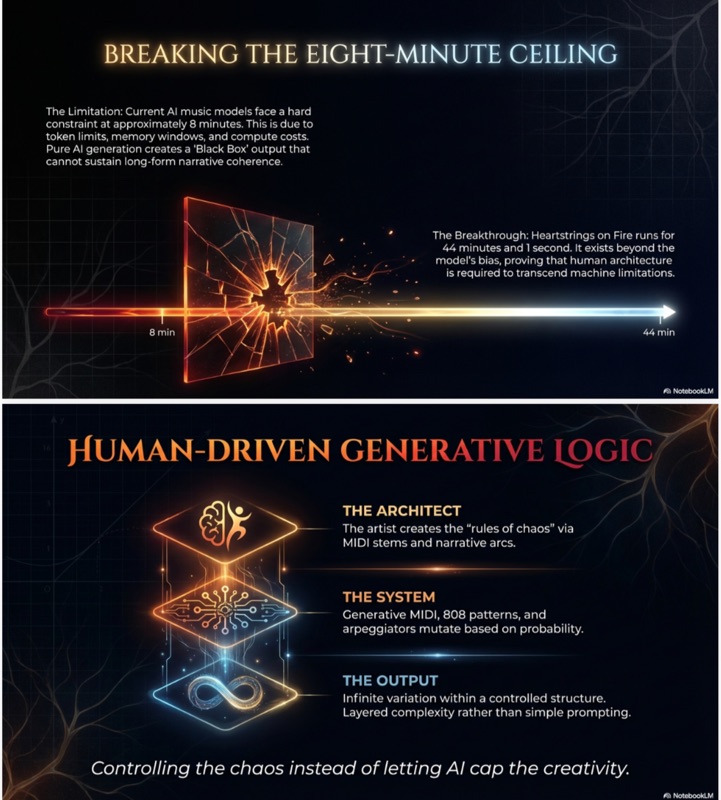
The suite represents a narrative-driven musical experience titled "Heartstrings on Fire (Cosmic Waltz)," credited to the artist persona Evilnix. It is categorized as a piano-violin-driven, melancholic, and viral opera-pop fusion.
Core Symbolism
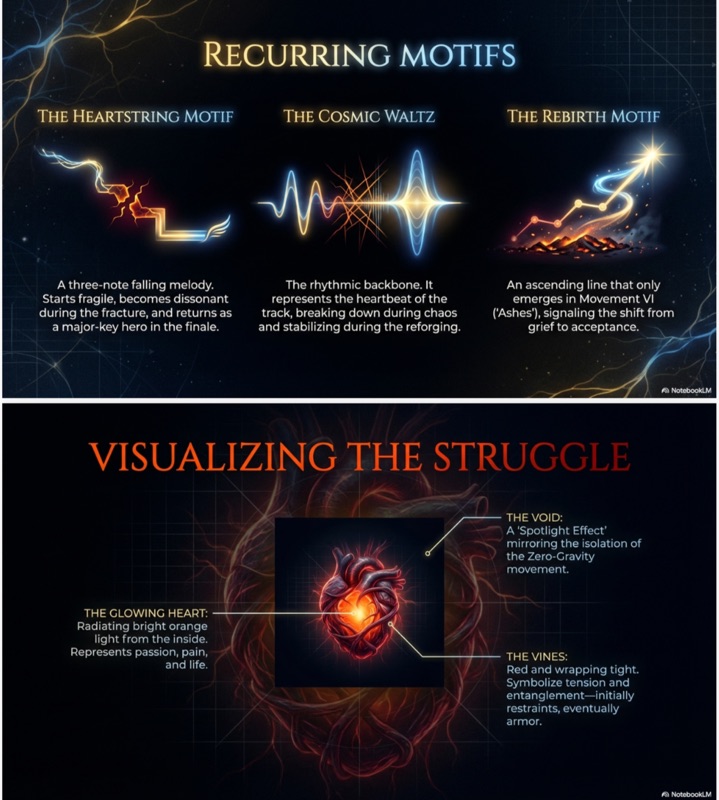
The visual representation of the project features a glowing, fiery heart entangled in red vines with small leaves. This imagery serves as a central metaphor for:
- Passion and Intensity: The heart radiates orange and yellow light, appearing to burn from within.
- Emotional Tension: The vines symbolize entanglement, pressure, and the struggle between pain and life.
- Transformation: The narrative arc follows the heart as it is consumed by flames, fractures under pressure, and is eventually reforged into a resilient state.
--------------------------------------------------------------------------------
Movement-by-Movement Analysis
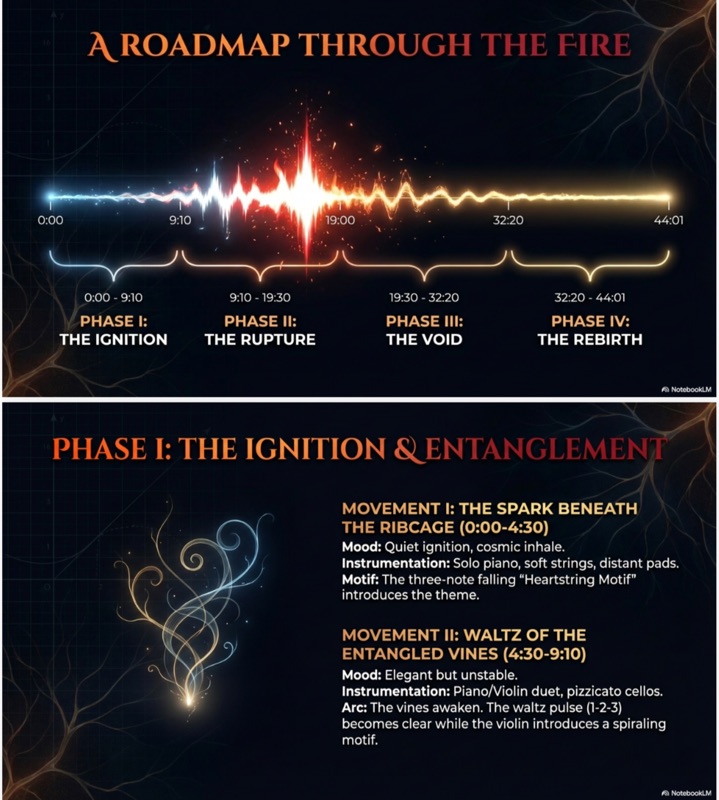
The suite's 44:01 duration is divided into eight movements, each progressing the narrative through specific motifs and instrumental shifts.
- The suite’s 44:01 duration is divided into eight movements.
- Each movement progresses the narrative through specific motifs and instrumental shifts.
- The first movement, “The Spark Beneath the Ribcage,” lasts from 0:00 to 4:30 and sets the stage with a quiet ignition and anticipation.
- The second movement, “Waltz of the Entangled Vines,” lasts from 4:30 to 9:10 and features an elegant but unstable waltz as the vines awaken and wrap around the heart.
- The third movement, “Fracturepoint,” lasts from 9:10 to 14:00 and depicts the rising conflict and overload as the heart cracks under pressure.
- The fourth movement, “The Fire Takes Hold,” lasts from 14:00 to 19:30 and portrays the blazing intensity as the vines ignite and the heart becomes a furnace.
- The fifth movement, “Zero-Gravity Heartbreak,” lasts from 19:30 to 26:00 and depicts a floating and surreal emotional void following the explosion.
- The sixth movement, “Ashes That Sing,” lasts from 26:00 to 32:20 and features grief, clarity, and acceptance as a new emotional truth forms from the ashes.
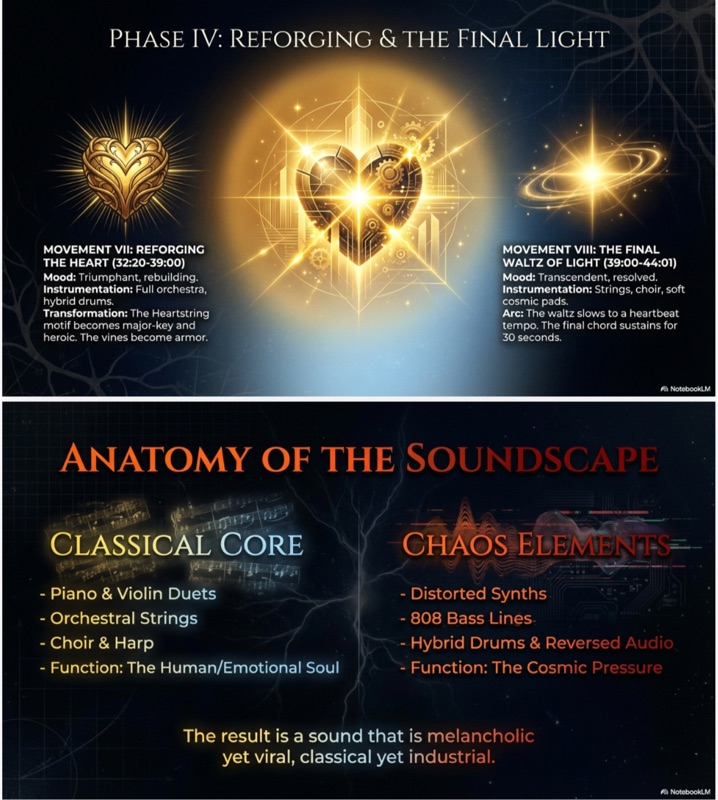
- The seventh movement, “Reforging the Heart,” lasts from 32:20 to 39:00 and depicts a triumphant and powerful reforging of the heart as the vines transform from restraints into protective armor.
- The eighth and final movement, “The Final Waltz of Light,” lasts from 39:00 to 44:01 and features a transcendent and resolved ending as the chaos settles into a steady burn.
Recurring Musical Motifs
- The "Heartstring" Motif: A three-note falling motif introduced in Movement I. It evolves from a gentle form to a dissonant stretch in Movement III, eventually becoming a heroic major-key theme in Movement VII.
- The Waltz Pulse: A 1-2-3 rhythmic structure that emerges in Movement II, dissolves into free-time during the "heartbreak" of Movement V, and returns with confidence in the final movements.
- The Rebirth Motif: An ascending five-note line introduced in Movement VI, symbolizing recovery and new beginnings.
--------------------------------------------------------------------------------
Compositional Methodology
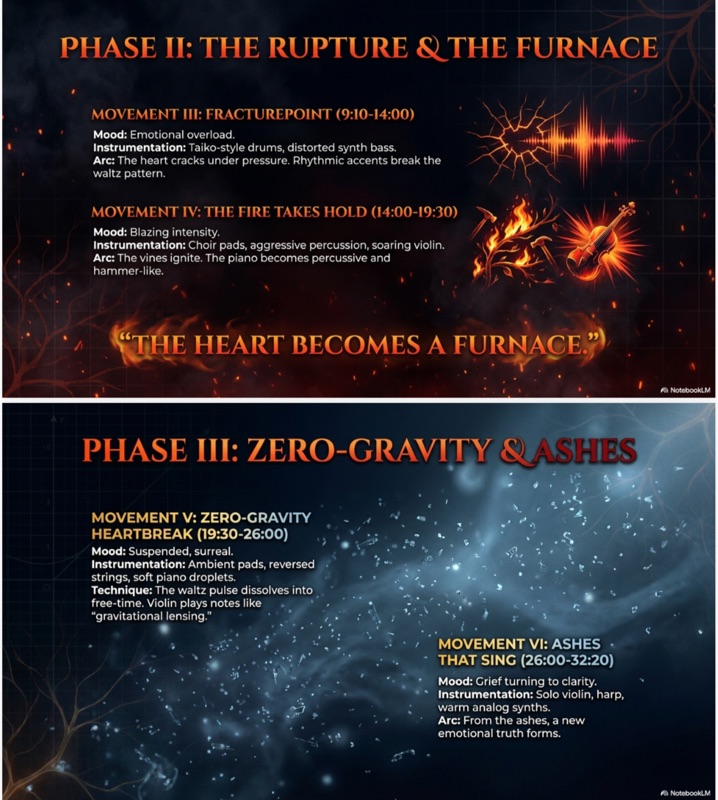
A critical aspect of "Heartstrings on Fire" is its departure from standard AI-generated music. The documentation identifies a significant distinction between "AI-only" tools and "artist-driven generative composition."
Technical Constraints and Solutions
- The 8-Minute Ceiling: Most AI music generators are capped at approximately 8 minutes due to model constraints, token limits, and compute costs.
- Generative Logic: The 44-minute duration was achieved by building a system where the structure evolves from rules rather than simple AI prompts. This includes:
- Generative MIDI Stems: Utilizing algorithmic logic for chord engines, 808 bass patterns, and arpeggios.
- Non-Linear Interaction: Creating layers that interact in evolving ways over time.
- Human Oversight: Manually designing the long-form arc and controlling the "chaos" of the generative elements to ensure a cohesive 44-minute narrative.
Instrumentation
The suite achieves its "hybrid" sound through a deliberate mix of textures:
- Classical: Solo piano, violin duets, pizzicato cellos, harp, and full orchestral layers.
- Modern/Cinematic: Distorted synth bass, taiko-style drums, choir pads, and warm analog synths.
- Experimental: Reversed strings, breath-like swells, and "gravitational lensing" effects on the violin.
--------------------------------------------------------------------------------
Conclusion
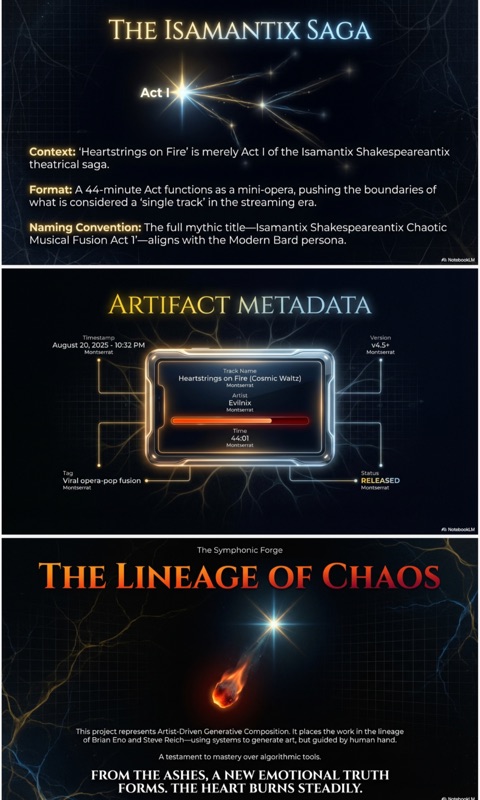
"Heartstrings on Fire" is a significant departure from standard digital compositions, positioning itself within the lineage of long-form ambient and operatic works. By synthesizing human-driven generative systems with a mythic, theatrical narrative, the suite explores the transition from emotional devastation to resilient, cosmic peace. This Act I establishes the foundation for a larger saga defined by high-intensity "opera-pop" drama and complex, rule-based musical evolution.

Comments
Post a Comment