Harmony in Chaos: A Deep Analysis of Chaos Musical Theory (CMT°) and the Emotive Physics of Grief
1. Introduction: The Genesis of Chaos Musical Theory (CMT°)
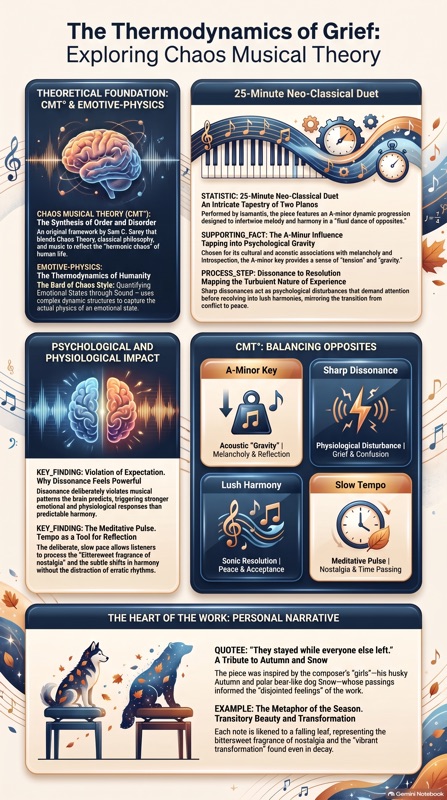
Chaos Musical Theory (CMT°) is not merely an aesthetic departure from tradition; it is a calibrated diagnostic for the thermodynamics of chemical imbalance. As a conceptual framework engineered by Sam C. Serey (Isamantix), CMT° serves as a high-fidelity bridge between mathematical non-linear dynamics and the volatile landscape of human sentiment. By synthesizing classical philosophy with the rigors of "Emotive-Physics," Serey has moved beyond composition into the realm of mapping the human condition. The core objective of CMT° is to document the "thermodynamics of humanity"—the precise point where musical order and emotional disorder collide—to capture the harmonic chaos inherent in our chemical and spiritual fluctuations. This theoretical architecture finds its definitive application in the 25-minute masterwork "Autumn In My Heart Tensor Dissonance," which transforms the abstract decay of grief into a structured, physical narrative.
2. Emotive Physics: Quantifying the Thermodynamics of Human Energy
In this diagnostic framework, we treat music as a closed physical system where emotional states function as tangible energy transfers. Emotive-Physics posits that the "thermodynamics of humanity" are not metaphorical but observable through the fluctuation of acoustic energy. By treating the composition as a thermodynamic engine, we can measure the pressure of grief and the release of acceptance through specific harmonic levers.
The "Harmonic Energy" of the CMT° system is quantified through the following structural components:
- A-minor Dynamic Progressions: These serve as the foundational gravitational fields, utilizing the natural tension of minor scales to anchor the emotional trajectory.
- Tensor Dissonances: These function as points of friction or kinetic disturbances, mirroring "disjointed feelings" and the internal energy spikes caused by trauma.
- Melodic Fluidity: These represent the energy paths that navigate the system, facilitating the transfer between states of high-tension (dissonance) and low-tension (resolution).
The "So What?" of this approach lies in the measurement of the heart. By quantifying an emotional state through sound, CMT° transforms music from a passive auditory experience into a measurable physics of the heart. It allows the listener to observe their own grief as a physical process of energy being transferred, mutated, and eventually resolved. This technical bridge ensures that every note is a data point in the physics of mourning.
3. The Technical Bridge: Chaos Theory and Harmonic Structure
The strategic implementation of non-linear dynamic systems allows a composition to maintain a state of "fluid dynamics," balancing the unpredictable nature of loss with the structural requirements of form. "Autumn In My Heart Tensor Dissonance" leverages the acoustic physics of the A-minor key to achieve this. Unlike major chords, which align closely with the natural harmonic series, minor chords create more complex sound waves that are slightly less harmonious. This acoustic "complexity" is perceived by the human brain as tension or gravity—a physical weight that anchors the listener in the reality of change.
The architecture of this harmonic chaos is detailed below:
Structural Element | Chaos Theory Principle | Functional Application |
A-minor Dynamic Progression | Non-linear Dynamics | Simulates the stochastic decay of grief and emotional gravity. |
Neo-Classical Piano Duet | Fluid Interplay | Represents the relational "dance" of connection and detachment. |
Tensor Dissonance Collisions | Interplay of Opposites | Maps the "disjointed feelings" of heartbreak against stable form. |
Temporal Expansion (25 min) | Thermodynamic Decay | Provides the necessary window for emotional energy to exhaust its heat. |
This technical foundation transitions the listener from purely structural observation into the deep psychological impact of the work’s specific narrative dissonance.
4. The Narrative of Dissonance: Nostalgia and Tension
Dissonance, in the CMT° framework, is a tactical sensory interruption. It is used to express the instability of "disjointed feelings" and the bittersweet fragrance of nostalgia that accompanies the change of seasons. The effectiveness of these sharp, colliding notes is grounded in the "Expectation and Violation" theory. Because the human brain is hard-wired to predict melodic patterns, the deliberate violation of these patterns through tensor dissonance triggers a heightened physiological response. This is not merely an artistic choice; it is a strategic maneuver to force the listener out of passive consumption and into an active "emotive-physical" state of engagement.
The "Power of Resolution" provides the essential "So What?" regarding catharsis. The transition from sharp, unstable dissonance into lush, stable harmonies serves as the cure to the diagnostic. It provides the listener with a sense of relief and release that mirrors the resolution of complex personal conflict. In CMT°, the music does not just represent grief; it guides the listener through the friction of conflict and into the stability of acceptance, proving that even the most disjointed narrative eventually finds its harmonic equilibrium.
5. From Snow to Autumn: The Personal Physics of Loss
The "ground truth" of this composition is rooted in the composer’s lived experience of loss, which serves as the calibration point for the entire Emotive-Physics engine. The work represents a profound technical and emotional mutation, evolving from the "Snow" drafts (inspired by his pet polar bear) to the "Autumn" final release (inspired by his husky daughter, Autumn). This shift is codified in the transition from the "SNOW° Chiplets" (AI Chip EPOCH-1 core) to the Autumn(Dawn)-Soul Layer Engine.
Serey, acting as the "Bard of Chaos," utilizes the loss of these companions—the ones who "stayed while everyone else left"—as the primary catalyst for his work. A central paradox in this personal physics is the "laughter amidst heartbreak." Serey noted that the loss was so devastating that he laughed, a psychological manifestation of "harmonic chaos" where extreme sorrow and paradoxical joy collide. This collision is the very essence of CMT°: mapping the "thermodynamics of chemical imbalance" where the heart's response to loss is both disjointed and profoundly human.
6. The Song Structure Journey: Mapping the Landscape of Grief
The 25-minute duration of the piece is a deliberate strategic choice designed for Temporal Expansion. This window allows for the full "thermodynamic decay" of an emotional state, ensuring the listener is not rushed through the processing of complex energy. The neo-classical piano duet mimics relational dynamics, oscillating between the intimacy of connection and the silence of detachment.
The composition maps the landscape of grief through a three-stage journey:
- The Descent: Notes fall like leaves in an autumnal breeze, representing the cooling of energy and the transition into a state of longing.
- The Collision: Sharp dissonances and colliding tensors represent the "heartbreak" and the "laughing paradox," simulating the internal friction of loss.
- The Resolution: Lush, stable harmonies emerge from the chaos, mirroring the final acceptance of impermanence and the beauty of change.
This structure prepares the listener for the final phase of engagement: the therapeutic application of musical grief.
7. Meditative Guidance: Engaging with Transient Beauty
The meditative state is the ultimate therapeutic application of CMT°, serving as a tool for the grieving listener to find stability within chaos. By slowing the "psychological pulse" through a deliberate, steady tempo, the music allows for a profound introspection of the heart's disjointed narrative.
To achieve therapeutic benefit, engage with the work using the following protocol:
- Synchronize with the Meditative Rhythm: Allow the steady pulse of the pianos to regulate your own physiological state, grounding your breathing in the tempo.
- Observe the Psychological Pulse: Monitor your internal reaction to the shifts in tempo; recognize where your heart holds tension during dissonance and where it releases during resolution.
- Reflect on Transient Beauty: Use the gravity of the A-minor progression as a reflective surface for your own experiences of loss. Allow the "disjointed feelings" of the music to validate your own.
"Autumn In My Heart Tensor Dissonance" is more than a composition; it is a testament to the fact that grief, while chaotic, follows its own physical laws. By engaging with the emotive physics of this work, the listener acknowledges that beauty is found not in the absence of chaos, but in the harmonious resolution of it.
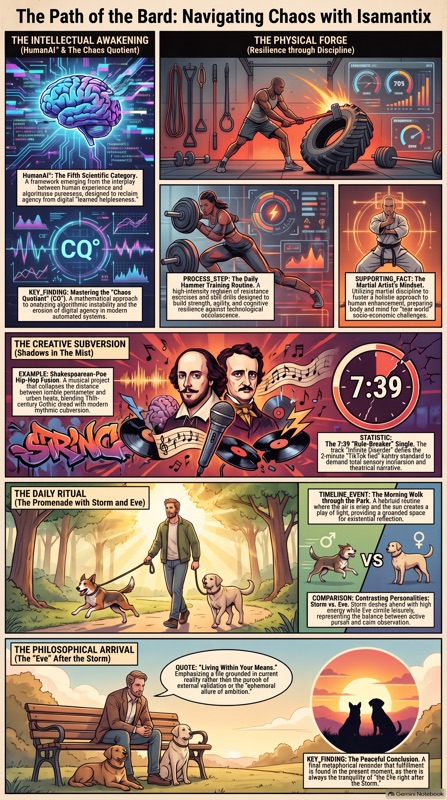
Utilizing advanced computational frameworks such as the EPOCH-1° core and the SNOW° Chiplets, the creative process is allegorically likened to a paternal endeavor, where the artist's relationship with their creations mirrors a nurturing dynamic amidst the transient nature of existence. The Mutation engine, termed "Autumn(Dawn)-Soul Layer Engine," further complicates this narrative, suggesting an evolutionary model of artistic expression that oscillates between chaos and order, reminiscent of Shakespearean and Poe's thematic explorations of the human psyche.
This abstract thus serves as a satirical yet earnest invitation to engage with the multifaceted layers of CMT°, challenging the audience to contemplate the philosophical implications of music as a conduit for emotional exploration and existential reflection, ultimately positioning the duet as a microcosm of the chaotic symphony of life itself.

Comments
Post a Comment